
Early Work and Health Conversations Boost Outcomes
Occupational Health, Work and Wellbeing
Why Earlier Conversations About Work and Health Matter
For occupational health providers, timing is everything. When conversations about work and health happen early, cases are simpler, outcomes are better, and pressure on already-stretched clinical teams drops dramatically. When they happen late, everyone feels the strain. This is exactly the gap Intelligent OH is built to close.
Early conversations prevent small issues becoming complex cases
Most complex occupational health cases do not start out complex. They begin as mild back pain, a dip in mood, or a short period of sickness that quietly stretches from days to weeks. By the time a referral lands on your desk, there may be months of absence, workplace conflict, and a worried HR team to contend with. Earlier conversations interrupt this escalation.
When employers are supported to ask, “How is your health affecting your work?” at the first sign of difficulty, you can guide simple, practical adjustments rather than firefighting long-term, emotionally charged situations. A short, structured conversation early on often avoids:
Prolonged absence that is harder and costlier to resolve
Deterioration of mental or physical health while “waiting to see what happens”
Escalation to formal processes that damage trust and morale
For occupational health companies, that means fewer high-intensity cases and a more sustainable workload. Intelligent OH’s automated decision-making is designed to support exactly this kind of early, proportionate response, so you can give the right advice as soon as a concern appears, not months later.
Better work and health conversations protect clinical capacity
Occupational health nurses and advisors are a finite, highly skilled resource. When every decision, however routine, relies on their time, caseloads grow, waiting lists lengthen, and clinicians end up spending precious hours on work that could be standardised or automated. Earlier, structured conversations help you protect clinical capacity in two ways.
They filter out low-risk cases that can be safely managed with straightforward guidance and simple workplace adjustments, without a full clinical assessment.
They clarify what information is actually needed before a referral, so any clinical time that is used is focused, efficient, and genuinely value-adding.
With Intelligent OH, much of this initial triage and guidance can be automated. Our software applies consistent, evidence-based criteria to determine risk, urgency, and next steps, reducing the reliance on clinicians to make every routine call. That means your nurses and advisors can concentrate on complex, high-impact work instead of being overwhelmed by volume.
Early dialogue builds trust between employers, employees, and OH providers
Many employees still worry that talking about health at work will be held against them. When conversations only happen at crisis point, that fear is reinforced: occupational health can feel like a last resort, or even a disciplinary step, rather than a source of support. Starting the conversation earlier changes the tone completely.
When managers routinely ask about work and health in a structured, respectful way, employees see that support is normal, not exceptional. They learn that occupational health exists to help them stay in work safely, not to push them out. For providers, that translates into:
More open, accurate information from employees during assessments
Fewer contested recommendations and less back-and-forth with managers
Stronger, longer-term relationships with client organisations
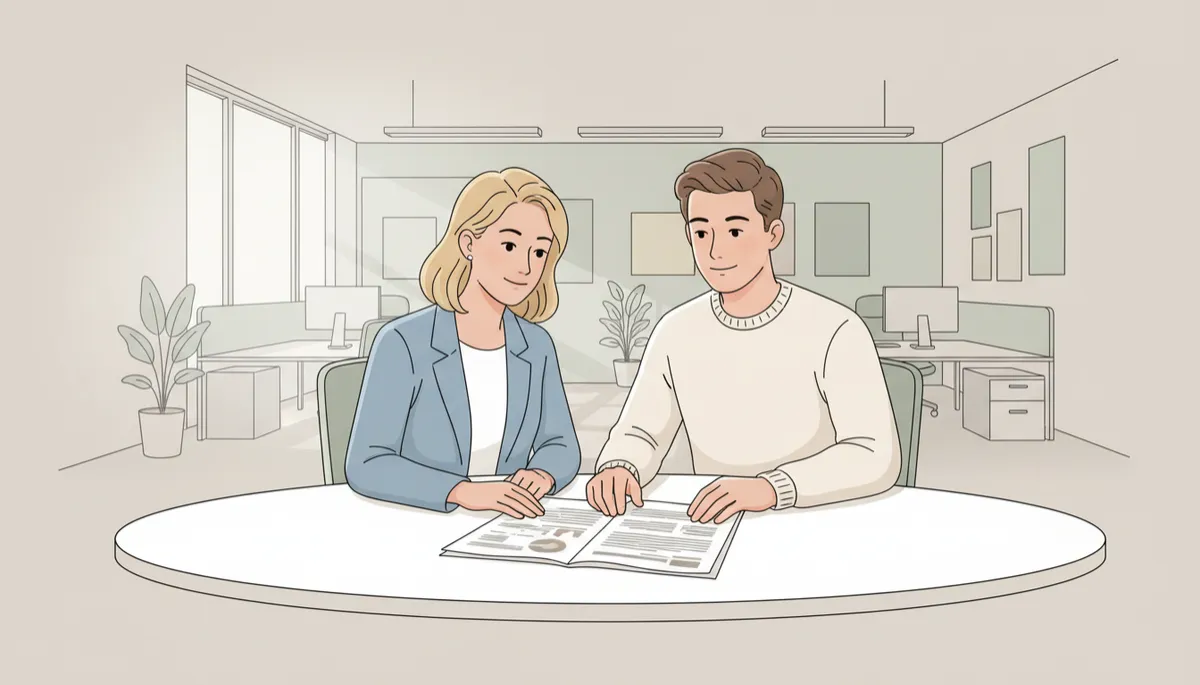
Consistent early conversations turn occupational health into a trusted, everyday support.
Earlier action reduces waiting times and improves customer service
From a business perspective, earlier conversations are not just clinically sound; they are commercially smart. When clients can access clear, automated guidance as soon as they notice a problem, they are not left waiting weeks for an appointment before anything happens. They experience occupational health as responsive, practical, and aligned with the pace of their business.
Because Intelligent OH automates much of the decision-making that typically sits with occupational health nurses and advisors, you can offer fast turnaround times without increasing headcount. That means:
Shorter waiting lists and fewer complaints about delays
Lower reliance on expensive agency nurses or overtime to clear backlogs
A smoother, more predictable service that protects your margins
Automation makes early conversations practical at scale
Most occupational health leaders agree that earlier conversations are better. The challenge is capacity: how do you support every early concern when your clinical team is already stretched? This is where Intelligent OH offers something genuinely different to the market.
Our software automates occupational health decision-making using structured, evidence-based logic. It means you can:
Provide instant, consistent recommendations for low and medium-risk cases
Reserve specialist clinical input for complex, high-risk situations where it is truly needed
Scale your service to more clients without a matching rise in staffing costs
By embedding automated decisions into your workflow, you can actively encourage earlier referrals and conversations, confident that your team will not be overwhelmed. You reduce inefficiency, avoid wasteful spending on unnecessary clinical time, and strengthen the integrity of your advice through consistent, transparent criteria.
Turning early conversations into your competitive advantage
Earlier conversations about work and health matter because they protect people, protect profits, and protect the precious capacity of occupational health professionals. For providers who embrace automation, they also become a powerful differentiator: you can offer a faster, more proactive, and more affordable service than competitors still relying solely on manual decision-making.
Intelligent OH exists to make that shift possible. By automating occupational health decision-making, we help you reduce waiting times, cut unnecessary reliance on nurses and advisors, and deliver a seamless experience to your clients from the very first conversation. If you want to turn early intervention from an aspiration into a daily reality, register for a ‘Genius’ login and see how our platform can transform your service.

